How to Design Landscape Lighting That Looks Intentional, Balanced, and Built to Last
Landscape lighting design sits at the intersection of technical precision and visual restraint. Done well, it enhances architecture, improves safety, and shapes how outdoor spaces feel after sunset. Done poorly, it creates glare, harsh contrast, and uneven coverage that distracts from the property rather than elevating it.
Professional landscape lighting design follows a clear process. Fixtures, beam spreads, mounting heights, color temperature, and electrical layout all matter as much as where the light lands. This guide walks through how experienced lighting designers approach outdoor lighting from planning through execution, using current best practices and modern LED technology. Early in many projects, homeowners choose to work with a professional design and installation team like Aloha Outdoor Lighting to ensure proper fixture selection, voltage balancing, and long-term reliability, yet the principles below apply to any well-designed system.
Start With Purpose Before Fixtures
Strong landscape lighting begins with intent, not product selection. Every outdoor space benefits from identifying its primary goals before a single fixture enters the plan. Safety lighting focuses on visibility and continuity along walkways, driveways, and steps. Architectural lighting emphasizes form, texture, and scale of the home itself. Landscape lighting highlights trees, gardens, water features, and natural contours.
Multiple goals often overlap, yet each area of the property should have a clear lighting role. A front entry rarely needs the same brightness or beam angle as a specimen oak in the backyard. Establishing priorities prevents over-lighting and avoids the common mistake of placing fixtures simply because space exists.
Professionals typically walk the property at dusk to observe sightlines, shadows, and ambient light sources. Existing streetlights, neighboring homes, and interior window glow all affect how much light is actually required.
Understand Layered Lighting Outdoors
Landscape lighting works best when layered. This approach mirrors interior lighting design and creates depth rather than flat illumination.
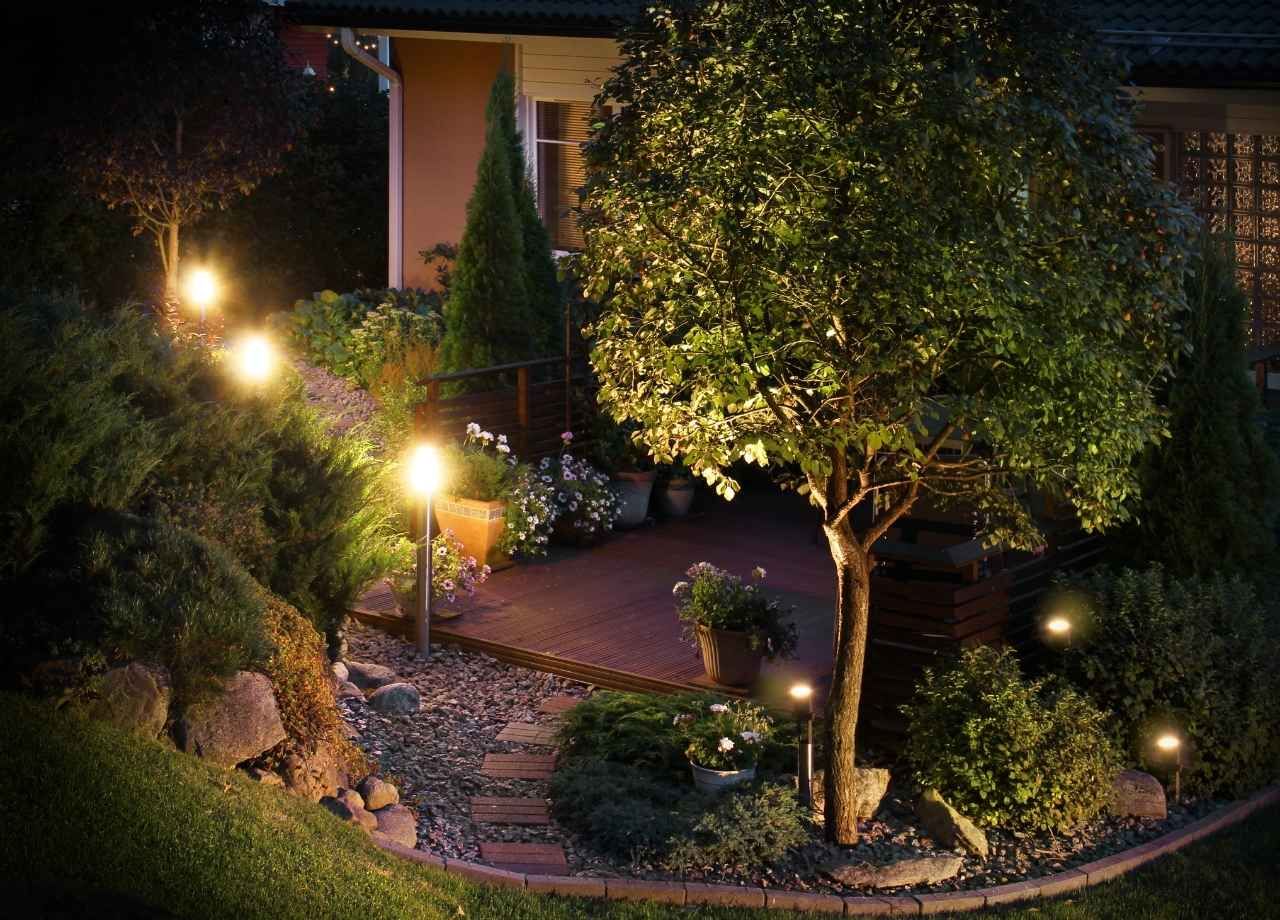
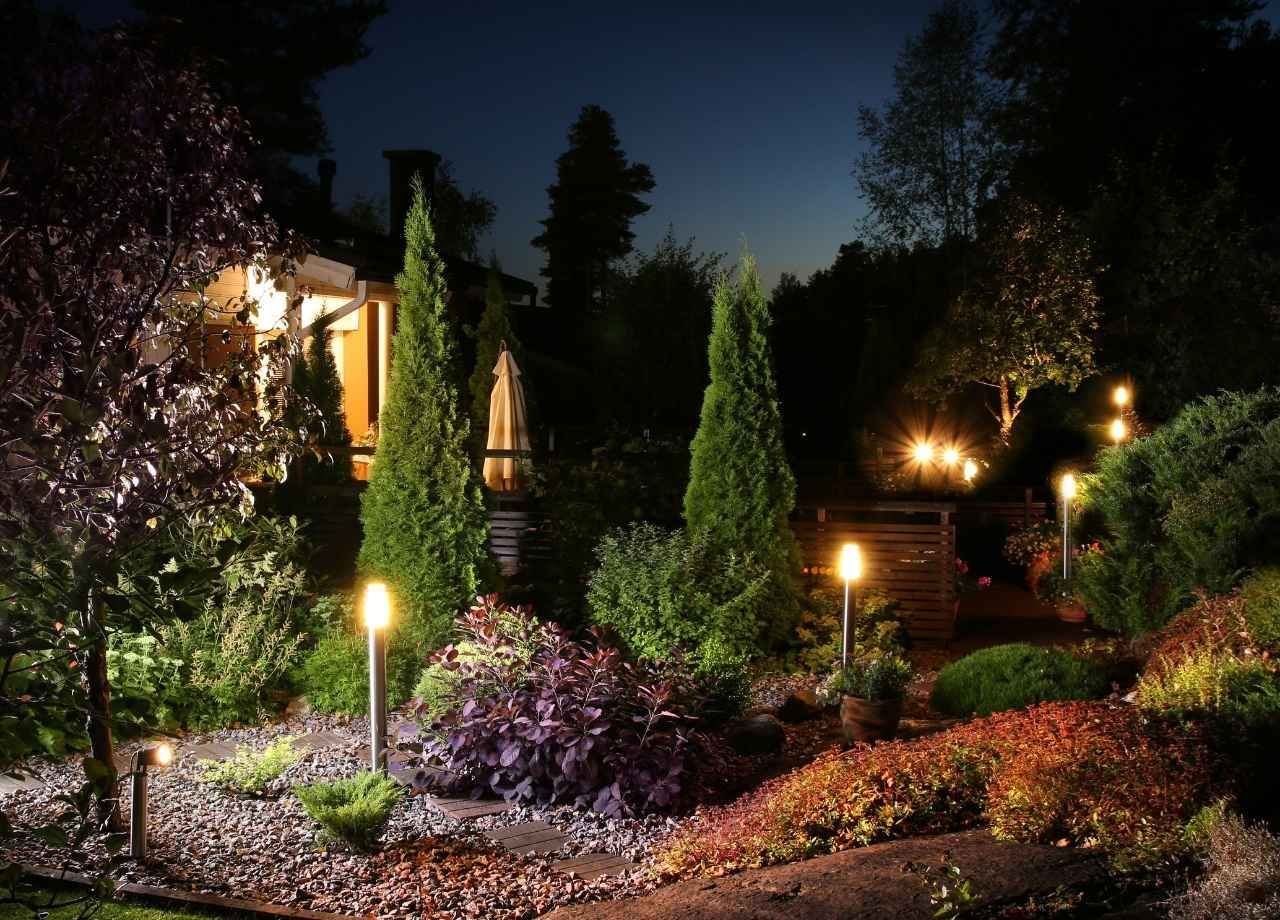
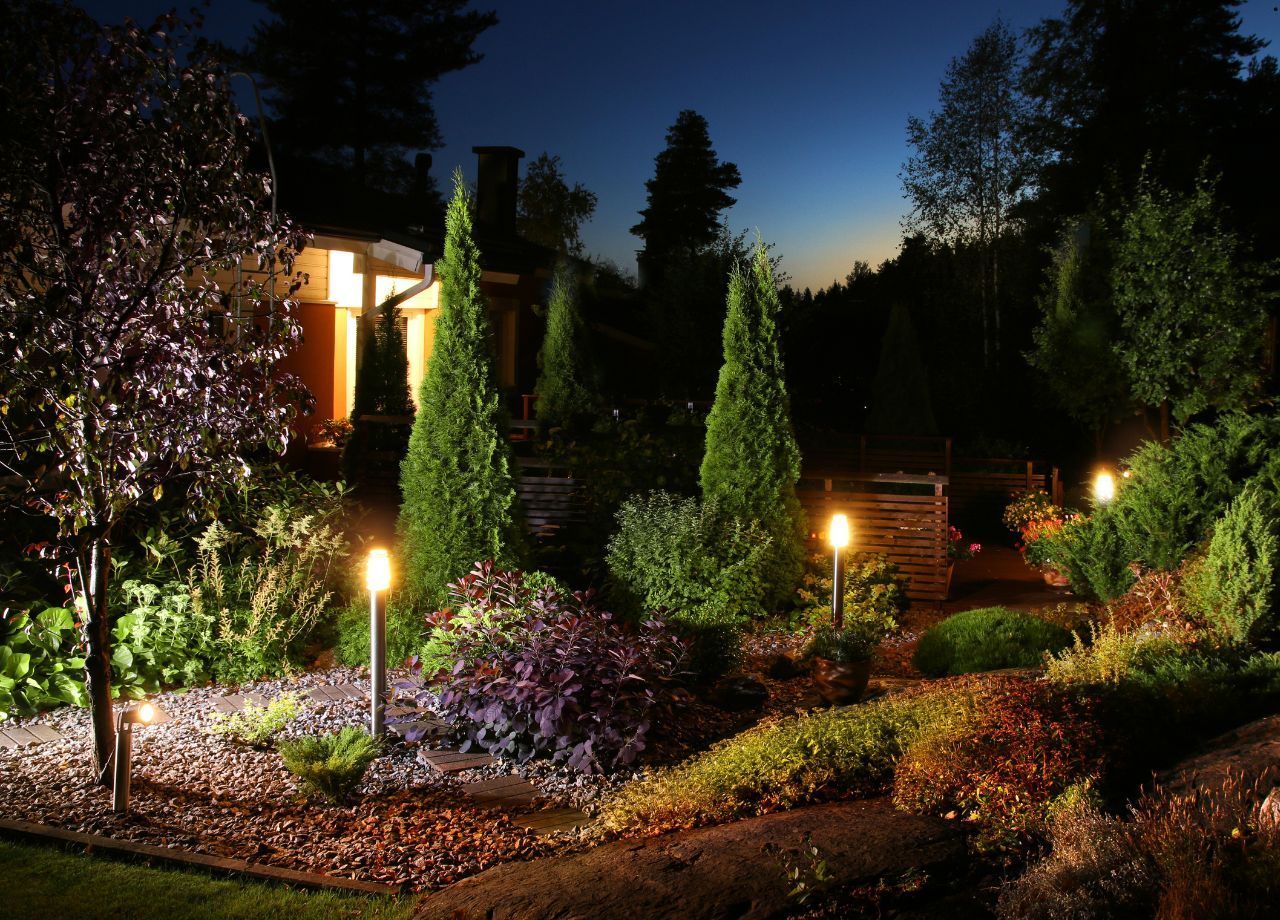
Ambient lighting establishes general visibility. Path lights, low spread washes, and soft area lighting create a comfortable base layer that allows people to move safely without feeling exposed.
Accent lighting adds drama and focus. Narrow beam uplights, well lights, and directional spotlights draw attention to trees, columns, stone textures, and architectural details. Accent lighting should remain selective and controlled rather than evenly distributed.
Task lighting serves functional needs. Steps, outdoor kitchens, seating areas, and entrances require precise illumination to support activity without glare. Under-cap lights, step lights, and shielded downlights often work better than exposed fixtures.
Layering prevents reliance on a single fixture type and creates visual balance across the property.
Choose the Right Color Temperature
Color temperature plays a major role in how natural or artificial a landscape feels at night. Modern LED fixtures offer precise control, making consistency essential.
Warm white lighting between 2700K and 3000K remains the standard for residential landscape lighting. This range complements natural materials, brick, wood, and stone while maintaining a welcoming atmosphere.
Cooler temperatures above 4000K tend to flatten textures and introduce a commercial appearance. These temperatures rarely belong in residential outdoor environments except for specific security applications.
Consistency matters more than exact numbers. Mixing multiple color temperatures across the property creates visual tension and reduces perceived quality. Experienced designers specify fixtures from the same manufacturer or calibrated product line to maintain uniform output.
Master Beam Angles and Light Placement
Beam angle selection separates amateur installs from professional systems. Wide flood beams work well for broad surfaces, while narrow spot beams create dramatic vertical emphasis.
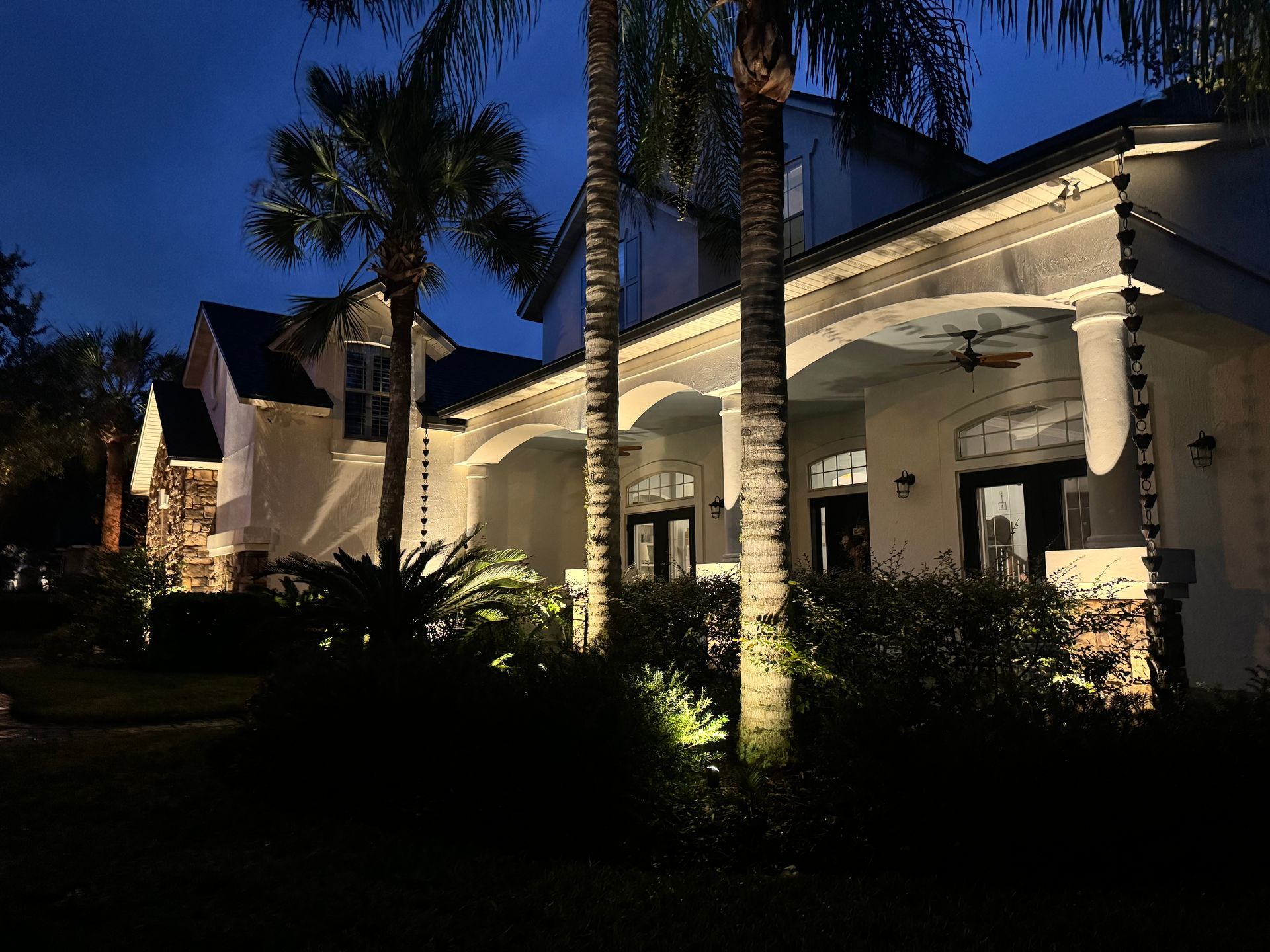
Trees often require multiple fixtures placed at varying distances rather than a single powerful uplight. Trunk grazing highlights bark texture, while canopy lighting fills foliage with soft illumination. Mounting angle and distance determine whether light feels sculpted or harsh.
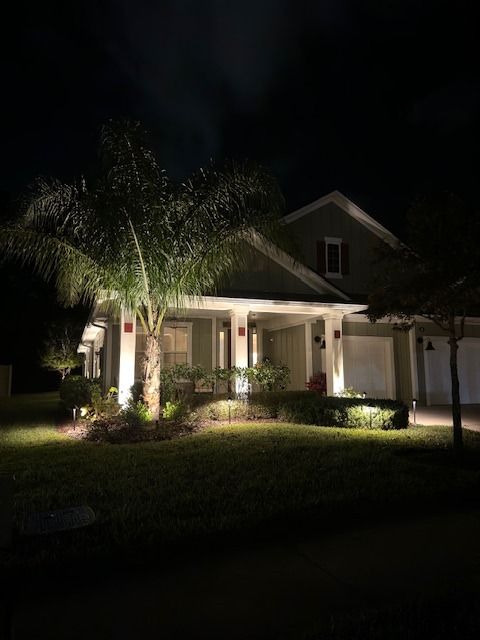
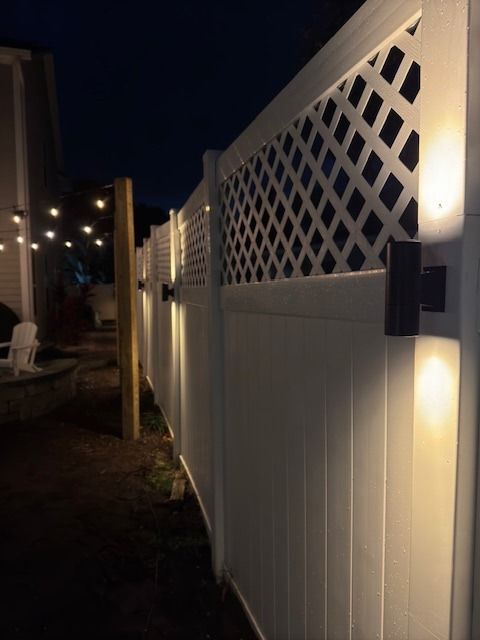
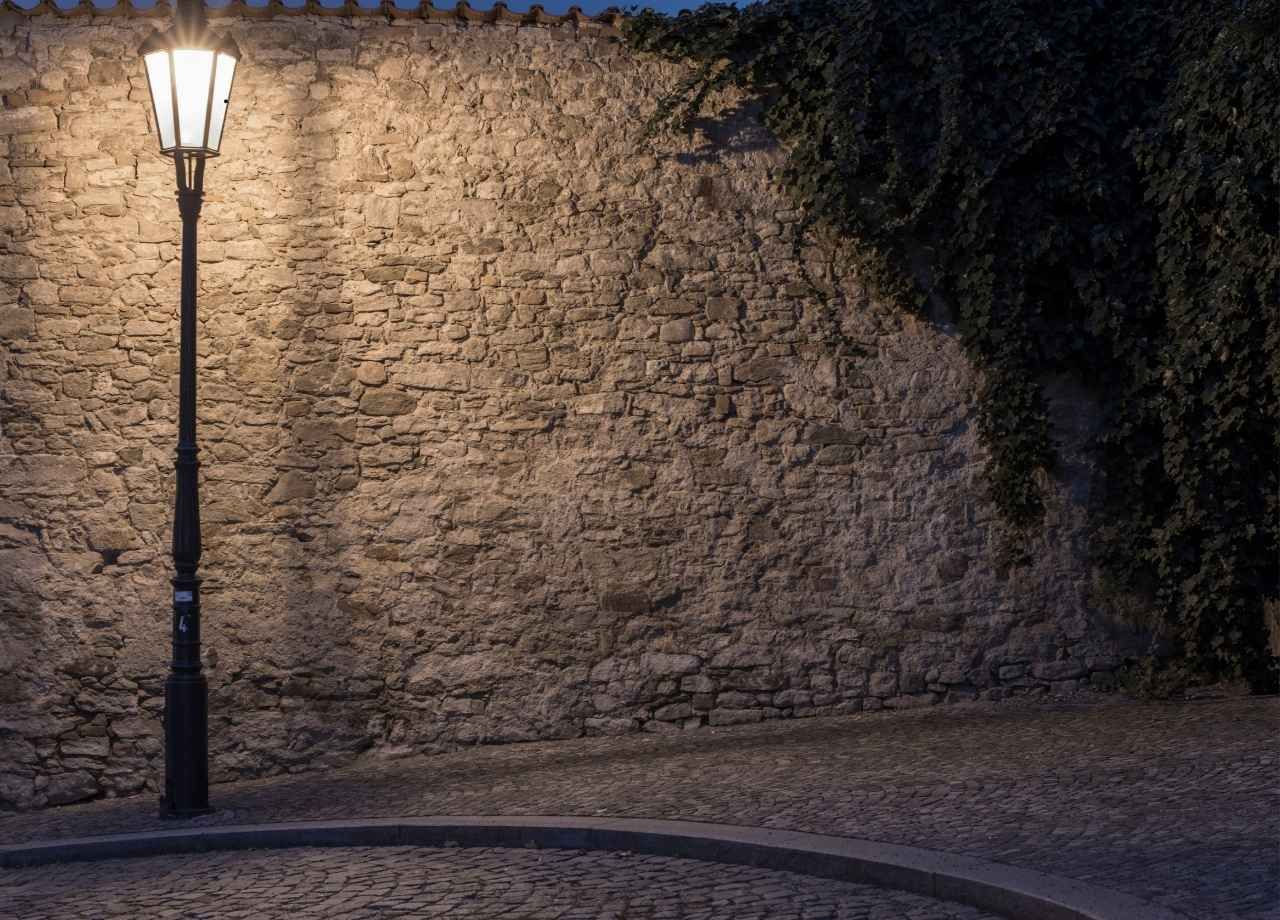
Architectural lighting benefits from grazing rather than blasting. Fixtures placed close to walls with narrow beam spreads reveal texture and dimension. Flooding a façade evenly removes shadow and flattens the structure.
Glare control remains critical. Fixtures should never shine directly into living spaces, neighboring properties, or eye-level sightlines. Shielding, shrouds, and careful aiming protect visual comfort.
Design With Shadows, Not Just Light
Effective lighting design values darkness as much as illumination. Shadows define form and create contrast that gives outdoor spaces depth.
Over-lighting eliminates shadow and produces a washed-out appearance. Selective lighting allows focal points to stand out while surrounding areas remain subdued. This balance guides the eye naturally across the landscape.
Negative space also improves energy efficiency. Fewer fixtures running at appropriate output levels outperform excessive lighting in both aesthetics and long-term cost.
Professionals often reduce initial fixture counts during final design reviews, refining placement to achieve more with less.
Plan Electrical Layout and Voltage Management
Low-voltage systems dominate residential landscape lighting for good reason. They provide flexibility, safety, and scalability when designed correctly.
Transformer sizing requires careful calculation. Total wattage should stay below 80 percent of transformer capacity to maintain efficiency and allow for future expansion. Multi-tap transformers enable voltage adjustment across long wire runs.
Wire gauge selection affects brightness consistency. Longer runs require heavier gauge wire to prevent voltage drop. Poor planning results in uneven output where distant fixtures appear dim or inconsistent.
Zoning adds control and flexibility. Separating front yard, backyard, architectural, and landscape zones allows tailored scheduling and brightness control. Smart transformers now integrate astronomical timers, mobile apps, and home automation platforms.
Account for Plant Growth and Seasonal Change
Landscapes change constantly. Trees grow, shrubs fill out, and gardens evolve. Lighting design must anticipate these changes rather than react to them later.
Fixtures should allow for adjustment over time. Stake-mounted lights provide flexibility, while hard-mounted fixtures require precise long-term planning. Trees that appear small during installation may require additional fixtures as they mature.
Seasonal shifts also affect lighting needs. Deciduous trees present different lighting challenges during winter when branches remain bare. Designers often aim for trunk and branch structure rather than foliage alone to maintain year-round interest.
Maintenance planning matters as much as initial design. Accessible fixtures, durable materials, and replaceable components extend system lifespan.
Balance Aesthetics With Safety and Code Compliance
Safety lighting requires consistency and visibility without resorting to excessive brightness. Pathways, steps, and elevation changes benefit from even illumination rather than spotty pools of light.
Local codes and dark-sky considerations increasingly influence outdoor lighting design. Shielded fixtures that direct light downward reduce sky glow and neighbor impact. Many municipalities now encourage or require responsible lighting practices.
Professionals stay current with evolving standards, fixture certifications, and installation techniques that meet both aesthetic and regulatory expectations.
Test, Adjust, and Refine After Installation
Landscape lighting design does not end when fixtures turn on. Final aiming and adjustment often take place after dark, once the system operates under real conditions.
Experienced designers return for nighttime walkthroughs to fine-tune beam angles, reduce glare, and balance brightness levels. Small adjustments produce noticeable improvements.
Long-term refinement continues over time. As plants grow and property use changes, lighting systems should evolve alongside them. Well-designed systems allow for easy expansion and modification without full replacement.
Think Long-Term With Materials and Build Quality
Outdoor lighting fixtures endure heat, humidity, rain, irrigation, and soil conditions. Material choice directly affects longevity and appearance.
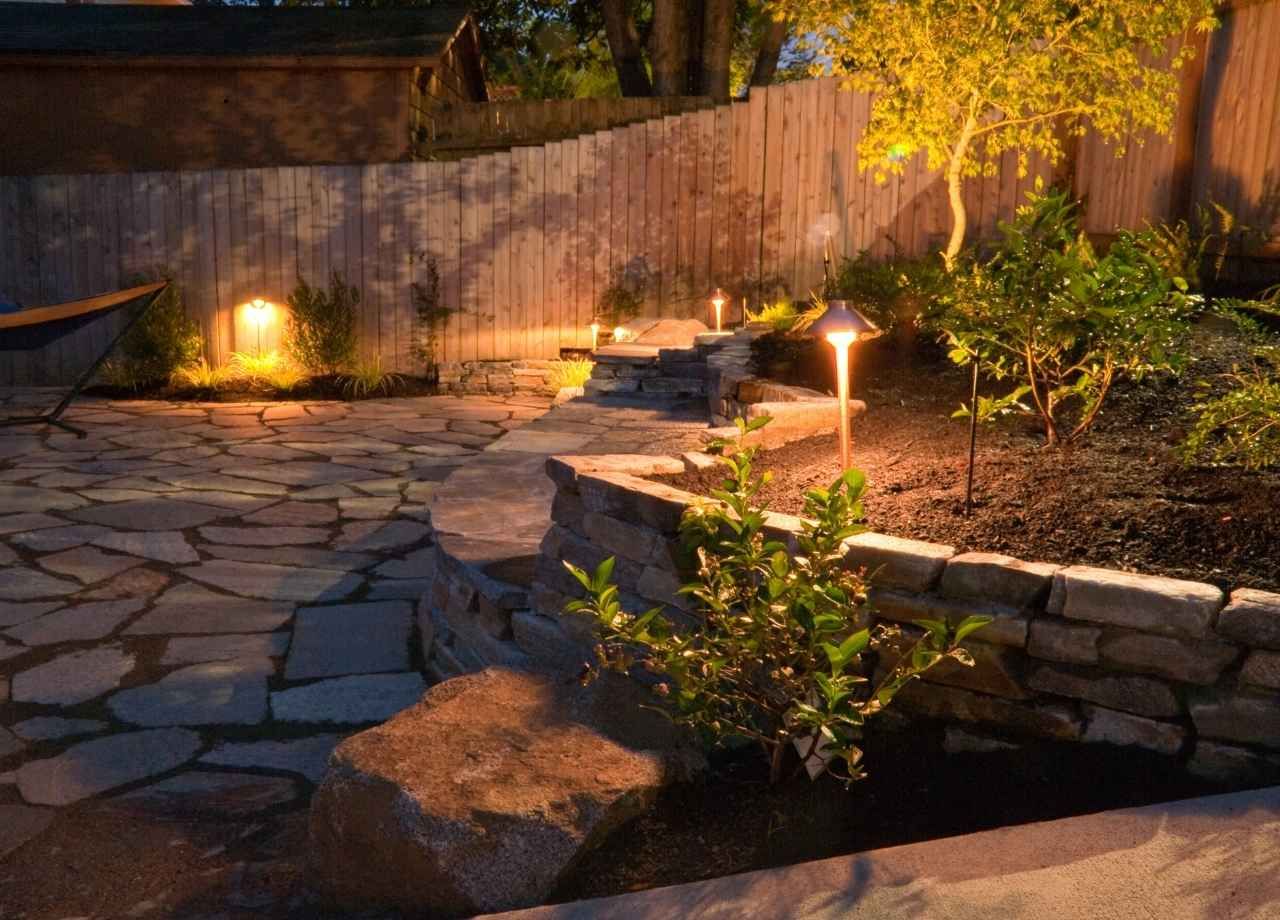
Solid brass, copper, and marine-grade aluminum outperform lightweight alloys and plastics. Integrated LEDs with proper thermal management last longer and maintain color consistency.
Cheap fixtures often fail prematurely, leading to inconsistent output and higher replacement costs. Investing in quality components protects the design intent and reduces maintenance demands.
Bringing It All Together
Designing landscape lighting requires restraint, technical knowledge, and an understanding of how light interacts with architecture and nature. Successful systems feel intentional rather than obvious, guiding movement, highlighting form, and preserving the natural character of the property after dark.
Every decision, from beam angle to wire gauge, influences the final result. Thoughtful planning, proper installation, and ongoing refinement separate ordinary lighting from outdoor environments that feel inviting, balanced, and timeless.